
Roof Repointing Explained: What It Is, When a Tile Roof Needs It and What the Work Involves
Roof repointing is the work of replacing the pointing along the ridge and hip capping of a tile roof. The pointing is the finishing layer you can see along the edges of each ridge cap, where the capping meets the roof tiles. It goes on over the bedding, which is the layer laid underneath the ridge cap first. When the pointing has cracked, crumbled or pulled away from the tiles, repointing clears the loose material and applies a new layer of pointing compound so the ridge line is finished again.
Easy Cut Painting Services repoints tile roofs as part of our roof restoration work, alongside replacing and repairing damaged tiles and applying UV stable roof coatings. The business is owner operated by Nasser Khadivi and has been working on Sydney homes since 2000.
We hold a NSW Fair Trading painting contractor licence (105492C) and we are a member of Master Painters Australia. This guide explains what pointing does on a tile roof, the signs your ridge capping is due for repointing, and what happens during the work, so you know what to look for before you book an inspection.
Key Takeaways
- Pointing is the visible finishing layer along the edges of the ridge and hip caps, and it sits over the bedding.
- Cracked, crumbling or gapped pointing along the ridge line is the main sign that a tile roof needs repointing.
- When the bedding under a ridge cap has broken up, the ridge cap is rebedded before new pointing goes on.
- Flexible pointing compounds are made to move with the roof instead of cracking the way rigid cement mortar can.
- Easy Cut inspects the roof before quoting, and repointing can be done as part of a full roof restoration.
What Is Roof Repointing?
On a tile roof, the ridge caps run along the top of the roof and the hip caps run down the angled edges where two roof planes meet. Each cap is set on a bed of material, and the joint where the cap meets the roof tiles is finished with pointing. Roof repointing means renewing that finishing layer once the old pointing has failed.
Pointing does more than tidy up the ridge line. Selleys, which makes the Point Works range of flexible pointing compounds, says in its technical data sheet that its compound qualifies as an adhesive mechanical fastener for hip and ridge tiles. Monier describes its own flexible pointing the same way, as an adhesive mechanical fastener for concrete and terracotta hip and ridge tiles. In other words, when one of these compounds is used, the pointing is part of how the ridge capping is held in place.
Bedding and Pointing on a Tile Roof: What Is the Difference?
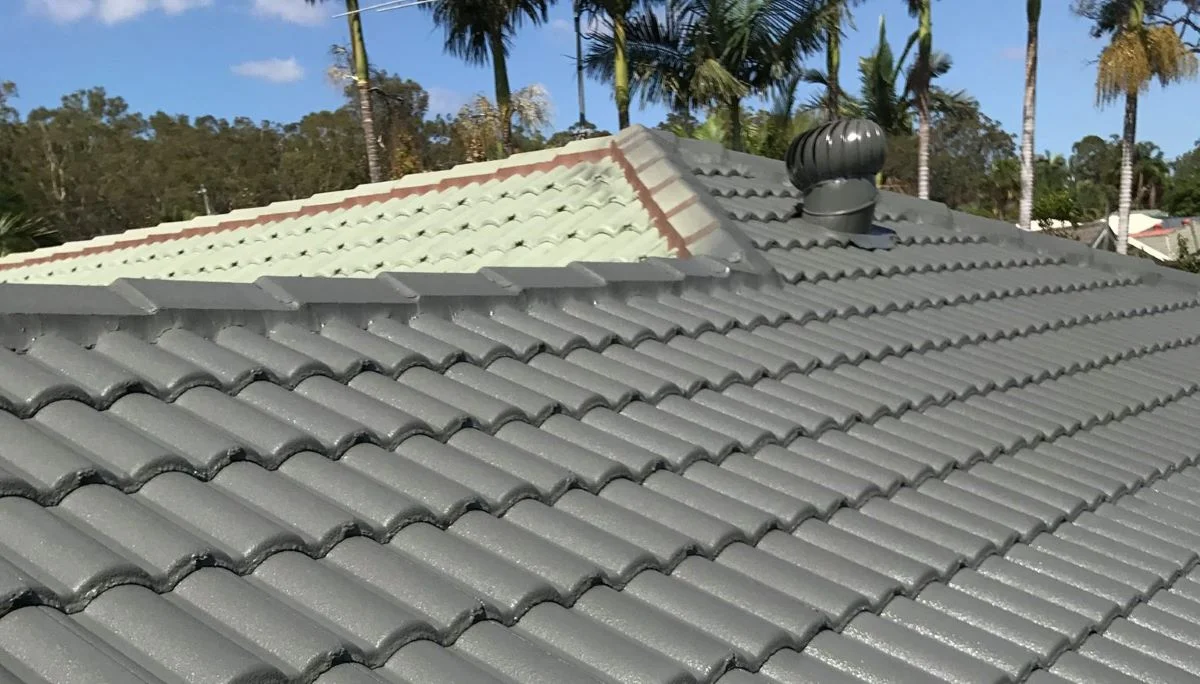
Bedding and pointing are two separate layers. The bedding is laid first, under the ridge cap. The pointing is applied over the bedding once it has cured. The Selleys data sheet sets this order out clearly: the bedding must cure for at least 12 hours at 15°C or higher, or at least 24 hours between 10 and 15°C, before the pointing goes on. It also says the bedding must be free of holes and defects and finished at least 3 mm under the edge of the ridge tiles.
That is why some roofs only need repointing and others need rebedding as well. If the bedding under the ridge capping is still sound, the old pointing can be cleared away and new pointing applied over it. If the bedding has broken up, loosened or left gaps, new pointing on top will not fix the problem underneath, so the ridge cap is rebedded first. At Easy Cut, rebedding ridge capping is part of our roof scope wherever the bedding has loosened or failed, and the inspection is where we work out which of the two your roof needs.
What Causes Ridge Cap Pointing to Crack?
A roof moves. Monier explains that flexible pointing differs from traditional cement mortar pointing, which it calls inherently brittle, because flexible pointing keeps a significant amount of flexibility after it cures. Monier says this lets its flexible pointing flex with roof movement without cracking or breaking away. Rigid cement mortar pointing does not have that give, so movement in the roof can crack it or pull it away from the tiles.
The conditions on the day the pointing is applied also matter. Selleys advises against applying its compound when the surface temperature is 10°C or lower, or when rain is likely within two hours. That means repointing has to be scheduled around the weather.
Signs Your Tile Roof Needs Repointing
Many of the signs that a tile roof needs repointing can be seen from the ground or from an upstairs window that looks across the roof. These are the ones worth a closer look:
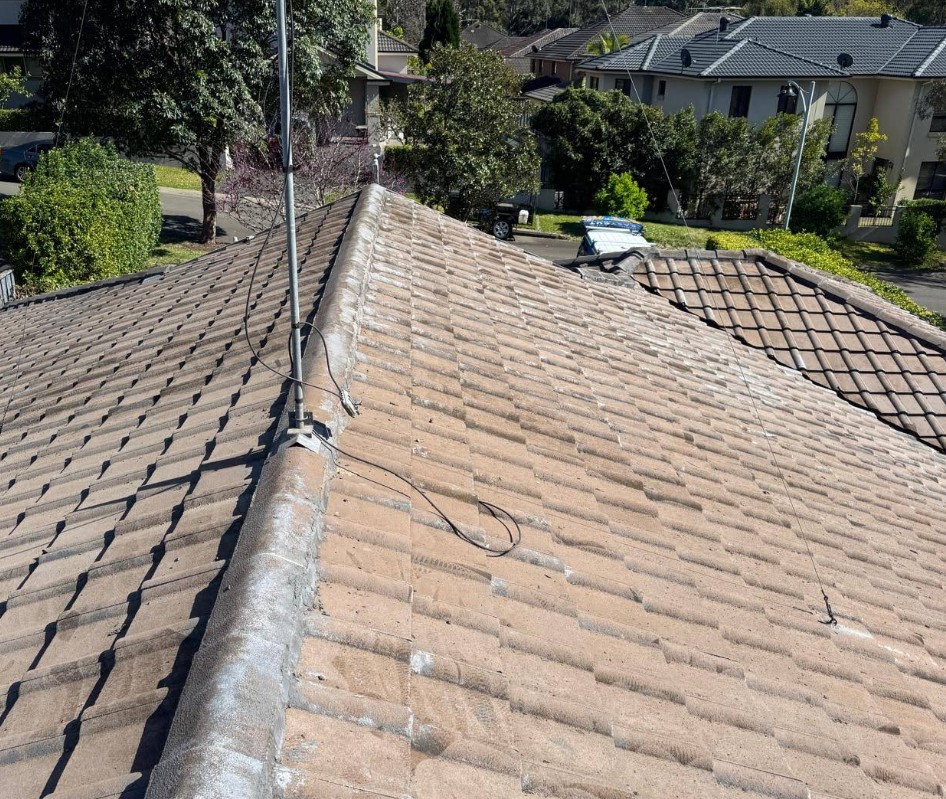
- Cracks running along the pointing on the ridge or hip capping.
- Crumbling pointing that has broken away and left gaps between the ridge caps and the roof tiles.
- Pieces of broken pointing sitting on the roof tiles or collecting in the gutters.
- A ridge cap that sits out of line with the caps on either side of it.
Cracked or crumbling mortar around the ridge capping is one of the signs we look for when we assess a roof for restoration, along with faded or chalking tiles, moss and lichen, and a coating that has started to peel. If you have noticed any of the signs above, tell us what you have seen and where when you book. The inspection confirms whether the ridges need repointing, rebedding or tile replacement.
What Roof Repointing Involves, Step by Step
The manufacturer of the pointing compound sets out how it should be applied, and the installer is expected to follow the Australian Standards as well. Here is the order the work follows, with the application steps taken from the Selleys Point Works Gen II data sheet:
- Inspecting the ridge and hip lines to see whether the bedding underneath is sound or needs replacing.
- Clearing away the cracked and loose pointing so the surfaces are clean and free of loose material, with no powdery bedding mortar left on the edges of the ridge tiles.
- Rebedding any ridge caps where the bedding has broken up, then letting the new bedding cure before pointing begins.
- Trowelling the flexible pointing compound to a thickness of 3 to 5 mm, with full contact on the roof tile and under the edge of the ridge tile.
- Installing weep holes in the ridges, which the Selleys data sheet says must be put in, either as the work goes or once the pointing is complete.
- Sweeping down each hip and ridge as the pointing is finished, so excess compound does not set on the roof tiles.
Cracked and broken tiles found during the inspection can be replaced as part of the same roof work, so the ridge lines and the tiles around them are repaired together.
Roof Repointing as Part of a Full Roof Restoration
Some tile roofs only need their ridges repointed. Others are also showing faded tiles, moss and lichen, porous tiles that absorb water, or a tired coating, and on those roofs repointing is one stage of a full roof restoration. In a restoration, we clean the roof, treat biological growth, repair mortar and cracked tiles where needed, seal the tiles, and apply a flexible membrane topcoat made for roof tiles. The mortar and tile repairs come before the sealer and coating, so the finished coating goes over a roof with sound ridges and no broken tiles.
If you are weighing up whether your roof needs a repaint or a full restoration, our guide on why qualified painters matter for roof painting and restoration explains the difference between the two and where shortcuts are usually taken.
What Affects the Cost of Roof Repointing
The cost of roof repointing depends on the roof in front of us, so we quote after we have inspected it rather than before. These are the things that shape the quote:
- The length of ridge and hip capping on the roof that needs repointing.
- Whether the bedding is sound or the ridge caps also need rebedding.
- How many cracked or broken tiles need replacing.
- The pitch of the roof, its height and how easy it is to reach.
- Whether the repointing is done on its own or as part of a full roof restoration with cleaning, sealing and coating.
When you call, Nasser usually comes out to the property himself. He checks the condition of the ridges, bedding and tiles, measures what needs doing, and then we write a fully itemised quote that sets out the work included.
Roof Repointing: Frequently Asked Questions
What is the difference between rebedding and repointing a roof?
Rebedding replaces the bedding layer that the ridge cap sits on. Repointing replaces the pointing, the finishing layer applied over the bedding along the edges of the ridge cap. A roof with sound bedding may only need repointing, while a roof with broken or loose bedding needs rebedding before new pointing goes on.
Can a tile roof be repointed without rebedding?
Yes, when the bedding underneath is still in good condition. The Selleys data sheet for its flexible pointing says the bedding must be free of holes and defects before the pointing is applied. If the inspection shows the bedding has broken up, the affected ridge caps are rebedded first.
Is flexible pointing better than cement mortar for roof repointing?
Monier describes traditional cement mortar pointing as inherently brittle, and says its flexible pointing keeps enough flexibility after curing to move with the roof without cracking or breaking away. Both Monier and Selleys describe their flexible pointing compounds as adhesive mechanical fasteners for hip and ridge tiles.
Do concrete and terracotta tile roofs both need repointing?
Concrete and terracotta tile roofs both have ridge and hip capping finished with pointing, so either type can need repointing when that pointing fails. Monier makes its flexible pointing for both concrete and terracotta hip and ridge tiles, in colours to match each.
Can roof repointing be done in cold or wet weather?
Pointing compounds have weather limits. Selleys advises against applying its flexible pointing when the surface temperature is 10°C or lower, or when rain is likely within two hours, and notes that curing takes longer in cold and wet conditions. Repointing is therefore booked for a suitable dry day.

Book a Roof Repointing Inspection with Easy Cut Painting Services
If the pointing on your ridge capping has cracked, crumbled or left gaps, call Nasser at Easy Cut Painting Services on 0416 283 735, or send an enquiry through our contact page.
Tell us what you have noticed on the roof and where, and we will arrange a time to inspect the ridges, bedding and tiles. We are based in Castle Hill and work on homes across the Hills District and wider Sydney.
After the inspection, we will explain whether your roof needs repointing, rebedding, tile replacement or a full restoration, and give you an itemised quote for the work.
Sources: Monier, Roof tile accessories, Monier Flexible Pointing (monier.com.au/roof-tiles/accessories, retrieved 2026-10-30). Selleys, Point Works Gen II Technical Data Sheet, version 1.2 (selleys.com.au, retrieved 2026-10-30).


Our Services
Get in Touch Today
Contact our team for expert advice and a free, no-obligation quote.
